
How do you make a small garden feel larger?
To make a small garden feel larger, use horizontal slatted fencing to draw the eye outward, create multi-level zones to add depth, implement vertical wall planters to free up ground space, and install a low-profile porcelain patio that flows seamlessly from your home's interior floor. Avoid cluttering the layout with curved borders or central grass circles that shrink the perceived footprint.
In this Guide:
Have a Compact Garden?
A small space doesn't mean you have to compromise on style. Request an obligation-free garden design consultation with Cork's small garden specialists.
1. The Small Garden Myth: Clutter vs. Clean Zoning
Let's debunk a major landscaping myth: a small garden does not mean you are limited to a couple of pots and a patch of grass. In fact, compact yards—common in Cork City developments, terraced houses in Douglas, and modern estates in Carrigaline—are a brilliant design opportunity. The absolute worst mistake homeowners make is trying to cram a miniature version of a suburban country park into an 8m x 5m space. They add a tiny lawn, a wavy stone path, a garden shed, and a massive dining set, leaving the area feeling claustrophobic and cluttered.
A small garden is actually a blessing in disguise: you don’t need a tractor to cut the grass, and weeding takes ten minutes rather than an entire weekend. But to make it work, you must design it as an **outdoor room**. Every square inch must have a purpose. By introducing clean lines, geometric zones, and vertical landscaping, you can create a high-end sanctuary that feels twice its actual size.
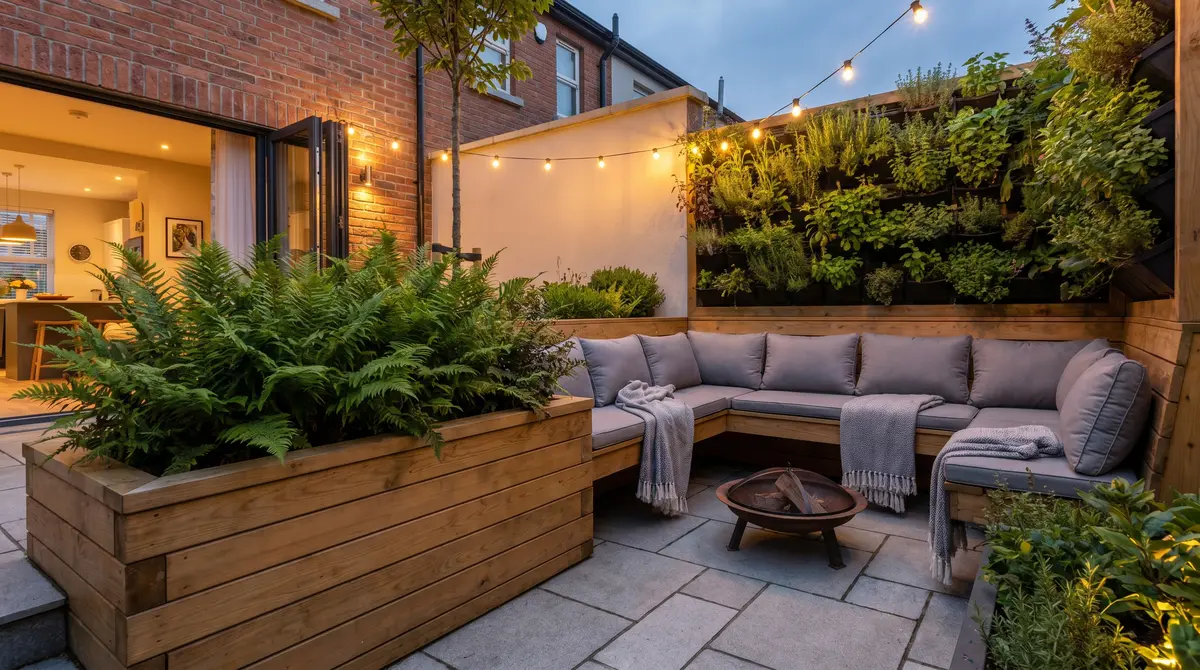
Clever zoning in a compact space: A modern built-in timber seating bench combined with vertical slatted cedar panels and subtle lighting.
2. The 3 Golden Rules of Compact Garden Design
When space is at a premium, architectural structure matters far more than decorative planting. We follow three strict design rules to make compact spaces function beautifully:
Rule 1: Build Up, Not Out (Verticality)
Ground space is currency. Every planter you place on the ground eats into your seating and walkway areas. Instead, build raised timber masonry planters or install a slatted wood living wall. Slatted horizontal fencing (such as cedar or composite timber) does double duty: it hides old brick walls and draws the eye horizontally, making the yard feel wider.
Rule 2: Built-in Furniture is Non-Negotiable
Freestanding garden furniture is bulky and difficult to store in a small yard during Cork's long winters. Built-in L-shaped benches made from matching hardwood or composite materials offer twice the seating capacity while incorporating hidden dry storage beneath the seats for cushions and tools.
Rule 3: Maintain Material Consistency
Using five different materials (gravel, paving, timber, grass, and brick) in a small yard visually breaks up the ground, highlighting how tiny the space is. Limit your palette to two or three premium finishes—for example, light grey porcelain paving, warm cedar timber, and vibrant green artificial turf.
"A tiny garden is great: less weeds to pull when the next Cork cloudburst arrives, provided you haven't cluttered the floor with fifty plastic plant pots."
3. Lawn Decisions: Sod vs. Astro in Tight Spaces
Our direct, professional opinion is controversial to some: **real grass lawns rarely work in small, high-boundary Irish gardens.**
In a small yard, high walls and tall boundary fences block out sunlight. The damp clay soil never gets a chance to dry, meaning the real grass stays wet, turns muddy, and eventually gets completely choked out by moss. Dragging a heavy lawnmower through your kitchen or living room to cut 15 square metres of damp grass is also a weekly chore nobody enjoys.
For compact spaces, artificial grass combined with a proper sub-base is the most practical choice. It stays lush and green year-round, drains immediately after a downpour, and doesn't require a lawnmower or fertilizer storage. If you absolutely insist on real turf, you must install sub-surface land drainage and select shade-tolerant ryegrass seed blends.
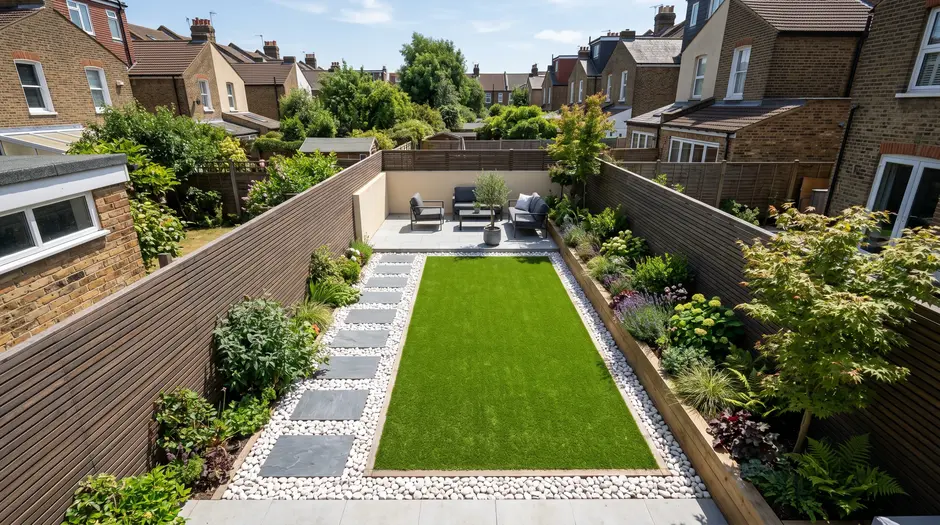
Clean, minimal landscaping: A small garden layout featuring premium artificial grass, decorative white pebbles, and clean stone stepping stones.
4. Vertical Botanical Artistry: Planting for Shade & Walls
In a small garden, planting must be highly curated. You cannot afford to plant shrubs that will grow out of control and block out valuable sunlight. Instead, focus on architectural specimens and vertical planting. Raised masonry planters (standing 450mm high) also double as additional seating ledges when guests visit.
Recommended Plants for Small Cork Gardens
Choose plants that thrive in semi-shade, offer multi-season interest, and don't overwhelm the space:
- Japanese Maples (Acer Palmatum): Perfect specimen plant for a corner, providing stunning autumn colour without taking up massive root space.
- Pleached Bamboo (Fargesia Murielae): A non-invasive clump-forming bamboo that creates a soft, rustling privacy screen without spreading wild runners under your patio.
- Ferns and Hostas: Thrives in damp, shaded spots along boundary walls, offering rich textures and lush greens that handle local rain effortlessly.
- Star Jasmine (Trachelospermum Jasminoides): An evergreen climber that runs up timber slats, releasing a sweet fragrance in summer and turning deep bronze in winter.
5. Case Study: Transforming a Narrow Terraced Alley in Douglas
In Douglas, Cork, we worked with a homeowner who owned a mid-terraced property. The rear garden was extremely narrow—only 4.5 metres wide and 9 metres long—surrounded by high, mismatched concrete block walls. The garden was essentially a damp, muddy path that collected water from the neighbouring properties.
The client wanted a space where they could drink their morning coffee, read, and host friends for a summer barbecue, but it had to be completely low-maintenance.
Our transformation spec:
- We installed a comprehensive perimeter drainage pipe to capture and divert standing groundwater.
- We clad the concrete block walls with horizontal, light-toned slatted cedar panels, immediately making the yard feel wider and brighter.
- We laid a flush light-grey porcelain patio, extending the home's indoor kitchen floor levels directly into the garden.
- We constructed a custom L-shaped wooden bench with built-in storage in the corner.
- We laid a small patch of premium artificial grass in the center, bordered by clean white stone paths.
The entire makeover cost €6,500 and took our crew four days. The homeowner now uses the space as an extension of their living room, describing it as their "private sanctuary in the middle of Douglas."
6. Frequently Asked Questions
A professional landscape transformation for a small garden (under 50m²) in Cork typically costs between **€3,000 and €8,000**. This budget covers site clearing, laying a premium porcelain patio, installing raised timber beds, drainage, and planting.
Yes, but standard garden sheds are bulky and take up too much premium floor space. We recommend **custom slimline storage lockers** that hug the boundary fence, or built-in garden benches that feature waterproof storage compartments under the seating lids.
Walled gardens are prone to waterpooling. We install **French drains** (perforated pipes surrounded by gravel) along the base of the walls, directing the collected rainwater to a central soakaway or linking it into the main surface water gully of the house. We also grade all paved surfaces with a 1:80 fall away from the home.
Maximize Your Outdoor Space
No matter the size, we can design a garden that fits your lifestyle. Get in touch with our design team today.

Written by the Green Nature Design Team
Specialists in luxury Irish landscape design, structural masonry, and high-performance drainage. Crafting enduring outdoor sanctuaries across Cork City and County for over 15 years.
Recommended Reads
 Design Trends
Patio Installation Cork: Porcelain vs Sandstone vs Paving
An expert comparison of paving materials for Cork's wet climate. Explore cost, drainage, and slip-resistance...
Read Full Guide Design Trends
Ultimate Guide to Luxury Landscaping in Cork (2026 Trends)
Discover how to transform your Irish garden with the latest in sustainable design, outdoor rooms, and hardscaping...
Read Full Guide Design Trends
Complete Garden Renovation Cork: Step-by-Step
The ultimate roadmap for a full garden makeover. Explore design planning, excavation, gravel drainage, and layout...
Read Full Guide