
Which is the best patio material for Cork's climate?
For Cork's damp, rain-heavy climate, outdoor porcelain paving is the best material. Unlike porous natural stones like Indian Sandstone, porcelain is vitrified and completely non-porous, meaning it absorbs zero moisture, does not host green algae or black lichen, is highly slip-resistant (R11 rated), and requires only a basic wash to maintain its premium look year-round.
In this Guide:
Thinking of a Patio Upgrade?
Skip the slippery stones. Get a custom, non-obligation estimate for a premium, low-maintenance porcelain, sandstone, or brick paving installation in Cork.
1. The Cork Patio Conundrum: Algae, Frost & Dampness
Let's make a direct statement: choosing the wrong paving material for your Cork garden will result in a green, slippery hazard within twelve months. In Ireland, a patio isn’t just subjected to occasional sun; it must endure over 200 days of rain, winter frosts, and long periods of damp shade. In places like Douglas, Kinsale, and Carrigaline, the humidity levels allow biological growth to colonize exterior surfaces at an alarming rate.
When selecting a stone for your backyard patio or driveway steps, you cannot just shop based on visual looks in a dry showroom. You have to consider porosity. Porous stones soak up water like a sponge. When the winter frost hits Cork, that trapped water freezes and expands, causing natural stone slabs to delaminate, crack, and lift. Furthermore, damp porous stones quickly grow a thick layer of black lichen and green algae—turning your outdoor space into an accidental ice rink.
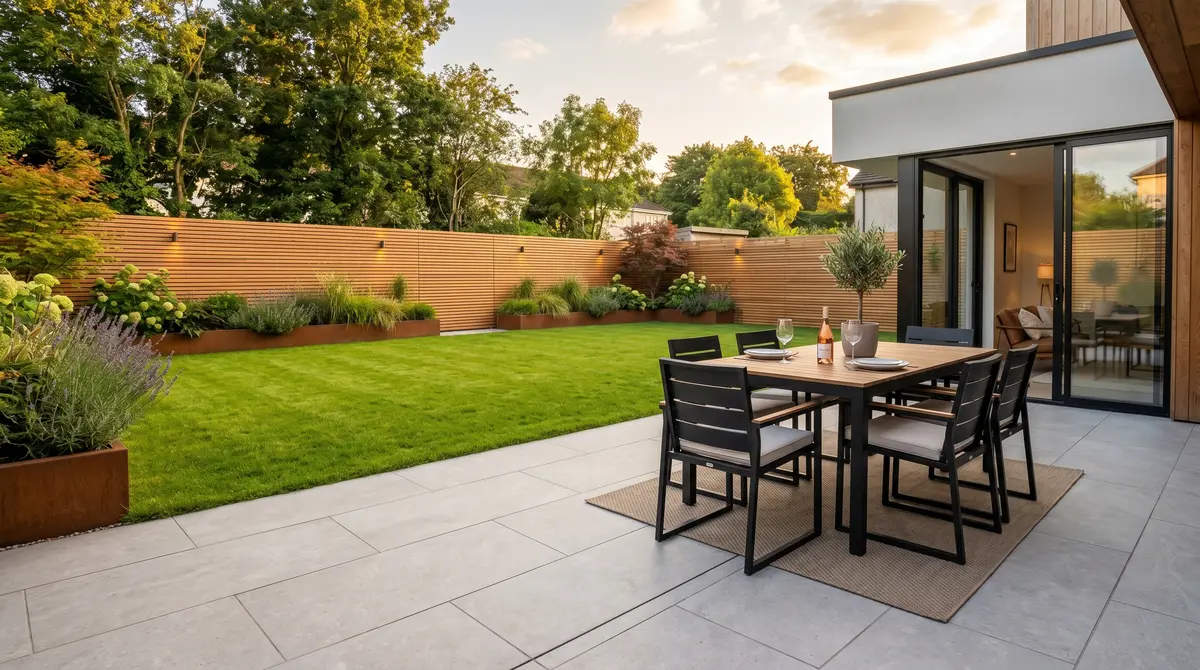
A newly installed, pristine grey porcelain patio in Cork featuring modern flush jointing and a low-maintenance layout.
2. Material Showdown: Costs, Pros & Cons
Every paving material has its place, depending on your aesthetic preferences, budget, and willingness to perform regular maintenance. Let's compare the three most popular options for Cork patios in 2026:
Option A: Outdoor Porcelain Tiles
Porcelain is clay fired at temperatures exceeding 1,200°C, vitrifying the tile and making it dense and glass-like. It is the gold standard for modern, clean landscape architecture.
- Cost: €120 – €180 per m² (fully installed)
- Durability: 30+ years (practically indestructible)
- Maintenance: Extremely low. A simple soap wash once a year.
- Slip Resistance: R11 rating (textured, safe when wet)
Option B: Indian Sandstone (Natural Stone)
Indian Sandstone is a natural, rustic stone with warm organic tones. It has been a staple of Irish gardens for decades, but it comes with heavy seasonal caveats.
- Cost: €90 – €130 per m² (fully installed)
- Durability: 15–20 years (subject to delamination from frost)
- Maintenance: High. Requires power washing and sealing every 6–12 months.
- Slip Resistance: Moderate to poor (becomes extremely slippery when algae develops)
Option C: Block Paving (Brick/Concrete Cobbles)
Block paving is ideal for driveways, transitions, and traditional courtyard cottage layouts. It consists of small interlocking concrete or clay bricks.
- Cost: €80 – €120 per m² (fully installed)
- Durability: 20–25 years (susceptible to sagging if sub-base is weak)
- Maintenance: Moderate. Sand joints require re-filling and weeding.
- Slip Resistance: Excellent (highly textured bricks)
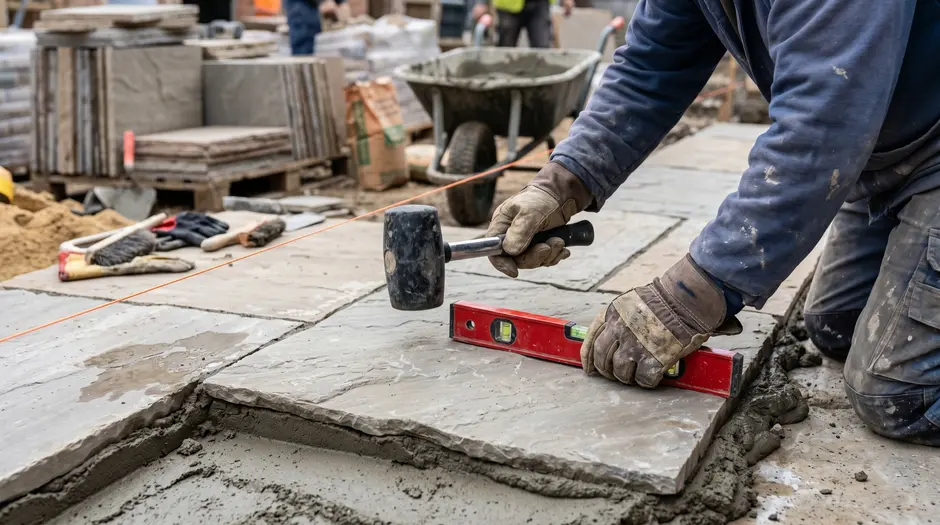
The hands-on process: Laying natural stone patio slabs on a wet mortar bed for a traditional, organic finish.
3. Why Porcelain is the Undisputed King of Irish Patios
Our firm, experience-backed opinion is absolute: **for a premium Cork home, natural stone is a maintenance trap. Porcelain is the only material that makes sense long-term.**
Here is the science behind why porcelain outperforms natural sandstone and limestone in local conditions:
- 0.05% Water Absorption: Natural sandstone has an absorption rate of around 5%–8%. Porcelain's absorption rate is less than 0.05%. This means water cannot penetrate the tile, preventing frost-cracking completely.
- Zero Algae Adhesion: Because algae and black lichen cannot feed on or anchor into vitrified porcelain, they cannot take root. Any surface dirt simply sits on top and washes away with a garden hose.
- Fade & Scratch Resistant: Unlike limestone, which fades from dark charcoal to a chalky grey under the UV rays, or sandstone, which wears down over time, porcelain retains its exact colour and texture forever.
"Natural timber decking and cheap natural stone look beautiful in photos—for about six months in Cork until the winter rain shows up."
4. The Foundation: Why Patios Fail in Cork Clay
A patio is only as good as the ground it sits on. In Cork, housing developments are built on heavy, wet clay soils. If a paving installer simply throws down sand and lays the stone on top (a common cheap contractor shortcut), the patio *will* fail. Within two winters, the clay will expand, sink, and cause the slabs to wobble and pop out.
Our Non-Negotiable 4-Layer Foundation Spec
We build our patios to outlast the house itself. Our installation specification involves:
- Excavation: Digging out the clay to a depth of 150mm–200mm.
- Sub-base: Laying 100mm–150mm of compacted Clause 804 hardcore stone, compacted with a heavy vibrating plate.
- Mortar Bed: Laying a full, wet concrete bed of sand and cement (not dry-mix or spot-bedding).
- Priming: Applying a synthetic polymer priming slurry (SBR) to the back of every single porcelain tile. This slurry creates a chemical bond between the tile and the concrete bed, preventing the tile from ever lifting.
5. Case Study: Replacing a Slippery Sandstone Patio in Kinsale
In Kinsale, Cork, we were contacted by a client who had a 60m² Indian Sandstone patio installed in their rear garden five years prior. The patio faced north-east, meaning it received very little direct sunlight during the autumn and winter months.
The problem was severe: the sandstone had developed a thick layer of black lichen that refused to lift with standard domestic pressure washers. The surface was so slippery that the client's elderly parents had suffered a fall on the wet stone, and the family had stopped using the outdoor space entirely.
Our solution:
- We carefully excavated and disposed of the old natural stone slabs.
- We reinforced the sub-base, adding proper drainage falls away from the house structure.
- We installed premium, anti-slip (R11 rated) Italian grey porcelain tiles (600x600mm) bonded with SBR slurry.
- We jointed the tiles with a high-performance, weather-resistant epoxy grout that prevents weed growth in the joints.
The result was a stunning, sleek, modern outdoor room. The client has not had to pull a single weed or pull out a power washer since. The space remains perfectly clean, safe, and slip-resistant through the worst of the winter coastal downpours.
6. Frequently Asked Questions
No. Outdoor-specific porcelain tiles have a textured, anti-slip surface rated to **R11 or higher**. This rating indicates the tile has been tested on a ramp and provides excellent slip-resistance, making it safer than natural sandstone, timber decking, or smooth concrete when wet.
Spot bedding (laying slabs on five dots of mortar) creates empty air pockets under the stone. Water collects in these pockets, freezes in winter, and pops the tile loose. It also allows weeds and ants to burrow up. **Full mortar bedding** covers 100% of the underside with concrete, ensuring structural stability, zero air pockets, and a permanent bond.
Cleaning a porcelain patio is incredibly simple. Because it is non-porous, dirt cannot soak in. Simply mix warm water with mild detergent, scrub with a stiff brush, and rinse off. There is **no need for harsh acid cleaners, sealing treatments, or intense power washing**.
Ready to Install a Premium Patio?
Invest in quality that lasts. Get a bespoke patio design and installation estimate from Cork's stone masonry experts.

Written by the Green Nature Design Team
Specialists in luxury Irish landscape design, structural masonry, and high-performance drainage. Crafting enduring outdoor sanctuaries across Cork City and County for over 15 years.
Recommended Reads
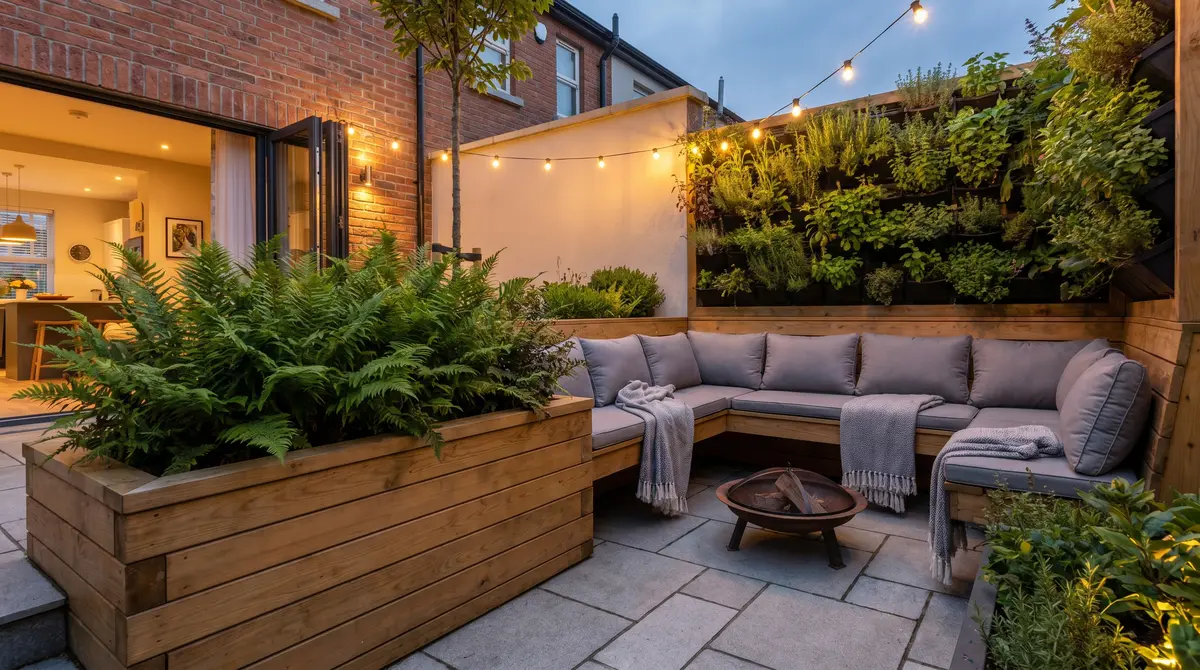 Design Trends
Small Garden Landscaping Cork: Compact Space Designs
Transform your small backyard. Learn how vertical wall planting and strategic zoning make a space feel double the size...
Read Full Guide Pricing Guides
Landscaping Cost Cork: 2026 Price Guide & Roadmap
Get the ultimate cost breakdown for patios, composite decking, fresh turf lawns, and complete garden makeovers...
Read Full Guide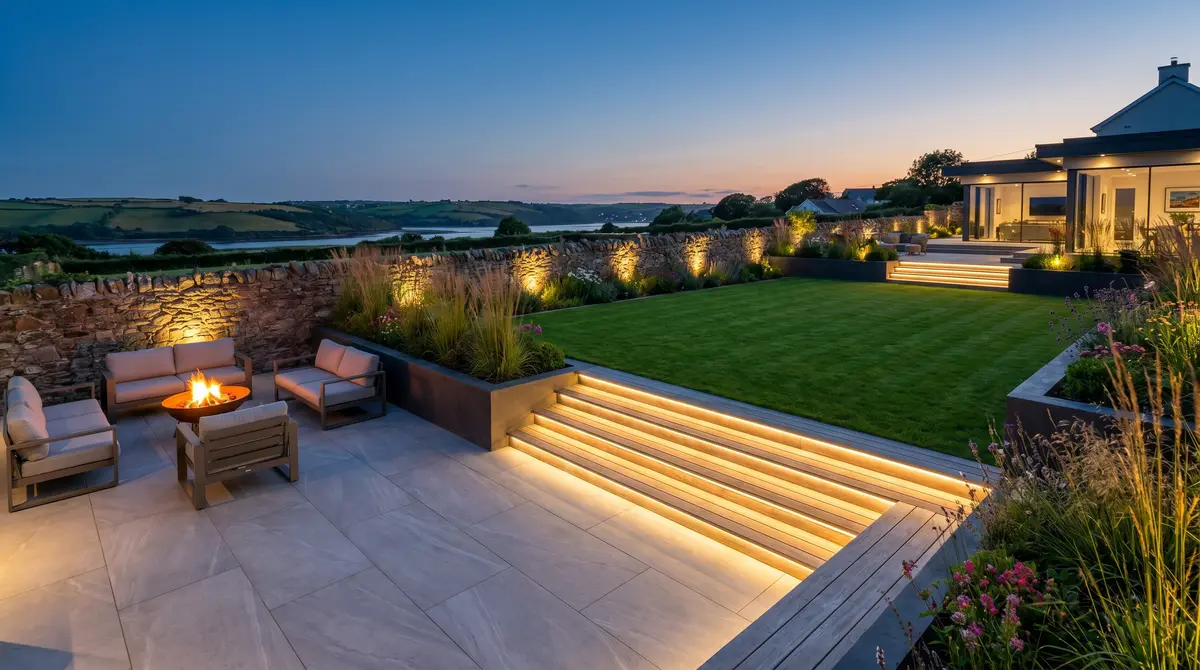 Design Trends
Complete Garden Renovation Cork: Step-by-Step
The ultimate roadmap for a full garden makeover. Explore design planning, excavation, gravel drainage, and layout...
Read Full Guide